
How to Design a Kids’ Bedroom in Dubai
Learn how to design a functional kids’ bedroom with expert tips from a Dubai-based interior design studio.
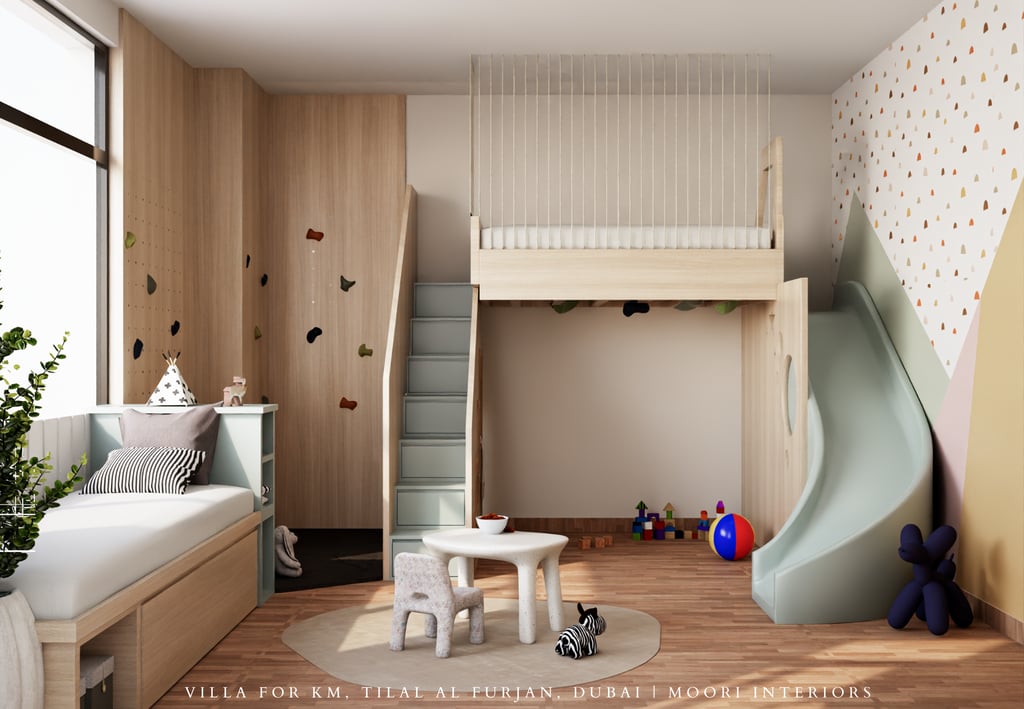
Kids’ Room Design in Dubai: How to Create Spaces That Grow with Your Child
Children’s bedrooms function differently from adult spaces.
While an adult bedroom typically supports one or two stable functions of rest and storage, a child’s room must accommodate sleep, play, learning, imagination, and organisation, often all within a single day. These functions also evolve rapidly. A space that works beautifully for a four-year-old can feel restrictive or chaotic by age seven if it hasn’t been planned with growth in mind.
A floor that looks generous on day one disappears once toys, books, and furniture arrive. A reading corner becomes a Lego zone. A bed doubles as a trampoline. Good design doesn’t resist this reality; it anticipates it.
Strong themes, dense decorative layering, or overly complex furniture systems often photograph well but struggle under real-life routines. Within weeks, parents find themselves constantly rearranging furniture, managing clutter, or intervening to make the room usable.
When a space requires frequent correction to function : moving items out of walkways, re-establishing study areas, or enforcing tidying rules, the design itself is carrying too much of the burden.
Research in child development and environmental psychology indicates that children respond best to environments where functions are clearly organised and easy to interpret. . For this reason, the role of design in a kids’ bedroom is not to stimulate continuously, but to provide a stable spatial framework.
Understanding the Childs needs
Every kids’ bedroom should be planned around the child who will use it. Daily routine, temperament, and interests influence how the space should be organised and prioritised.
Early Childhood
In early childhood, behaviour is predominantly movement-led. Spatial awareness is still forming, play happens close to the ground, and routines are externally managed. At this stage, the room’s primary role is to support exploration without introducing unnecessary risk or confusion.
Design priorities here are often misunderstood. More furniture, brighter colours, and themed elements do not improve engagement. Overly dense or visually busy environments are correlated with fragmented play and poorer sleep quality in younger children.
Effective rooms at this stage prioritise:
Generous, uninterrupted floor space
Low, stable furniture accessible without climbing
Simple, open storage systems that encourage intuitive use
Circulation paths should be obvious, furniture should feel anchored, and visual information should be limited to what is functionally useful. When a room is easy to read spatially, children are better able to focus on play and transition into rest.
Middle Childhood
Middle childhood marks a significant shift. Attention spans lengthen, routines become more structured, and bedrooms must support schoolwork, hobbies, and personal interests alongside play and sleep.
Many rooms begin to underperform at this stage not because they lack space, but because functions overlap without clear hierarchy. Arbitrary desk placement, storage that requires adult involvement, or play zones bleeding into rest areas increase daily friction.
Design at this stage must actively manage functional overlap. Key responses include:
Clear visual separation between activity zones, even within a single room
Storage systems that simplify daily routines
Layouts that support independent use
A study area, for example, should read immediately as a distinct function rather than an afterthought. When children can intuitively understand how a room is meant to be used, transitions between tasks become easier and routines more consistent.
Teenage Years
By adolescence, the bedroom becomes a personal retreat rather than a family-managed space. Privacy, control, and adaptability take precedence over overtly childlike cues.
Teenagers are particularly sensitive to spaces that feel prescriptive or visually dated. Rooms designed tightly around a theme or trend often age poorly, requiring premature redesign. In contrast, spaces that prioritise neutrality, proportion, and flexibility remain usable for longer.
Design considerations shift toward:
Adaptable layouts that support studying, relaxing, and social interaction
Storage that accommodates clothing, technology, and personal collections
Finishes and forms that feel mature without becoming austere
The most effective teenage bedrooms feel resolved rather than styled. They allow identity to emerge through use, not imposed decoration.
Encouraging Ownership Without Losing Control
Across all ages, involving children in limited, guided decisions such as selecting artwork, accent colours, or display areas strengthens their relationship with the space.
This involvement is most effective when the underlying structure is sound. When planning is clear, personalisation enhances the room without compromising function. The result is a stable framework that allows expression within defined boundaries as interests and routines evolve.
Space Planning
A kids’ bedroom succeeds or fails at the level of spatial structure. Before colour, decor, or individual furniture pieces are considered, the room must establish a clear hierarchy of use. Even in compact layouts, deliberate zoning creates predictability allowing children to navigate the space confidently, understand how it functions, and engage independently without constant instruction or correction.
At a functional minimum, a kids’ bedroom must support four interrelated zones:
Sleep: Calm, protected, visually restrained, and insulated from high-activity paths
Study: Positioned for focus with minimal distraction
Play / Activity: Flexible floor space that accommodates movement and creativity
Storage: Strategically distributed to support independence
These zones do not require rigid partitions. What matters is hierarchy, adjacency, and circulation, how zones relate, which take visual priority, and how movement flows between them.
The most critical planning decision is the placement of the sleep zone. Beds should sit in the quietest part of the room, away from doors, circulation paths, and high-activity areas. Research on sleep environments shows that even modest visual or physical disturbance around the bed can delay sleep onset and increase night-time waking, particularly in younger children.
Study zones benefit from adjacency to natural light and a clear backdrop. Desks facing play areas or open storage scatter attention and reduce focus. Proper placement reinforces routine and independent engagement, even before furniture or lighting choices are considered.
Play zones function optimally when they have uninterrupted floor space. Fixed furniture should define edges rather than intrude, subtly scaffolding movement while maintaining flexibility.
Storage should be distributed, low, and intuitive to access, reinforcing spatial logic and supporting independence.
Circulation: Designing for Safety and Ease
Traffic flow is frequently overlooked, yet it directly impacts safety, independence, and confidence. Primary paths from the door to bed, desk, and wardrobe must remain clear and unobstructed. Furniture placement should allow smooth movement without sharp turns or narrow pinch points, particularly for children under six, whose balance and spatial awareness are still developing.
Predictable circulation reduces trips and collisions, supports confident navigation, and preserves the room itself: furniture experiences less climbing, pushing, or misuse when movement paths are intuitive.
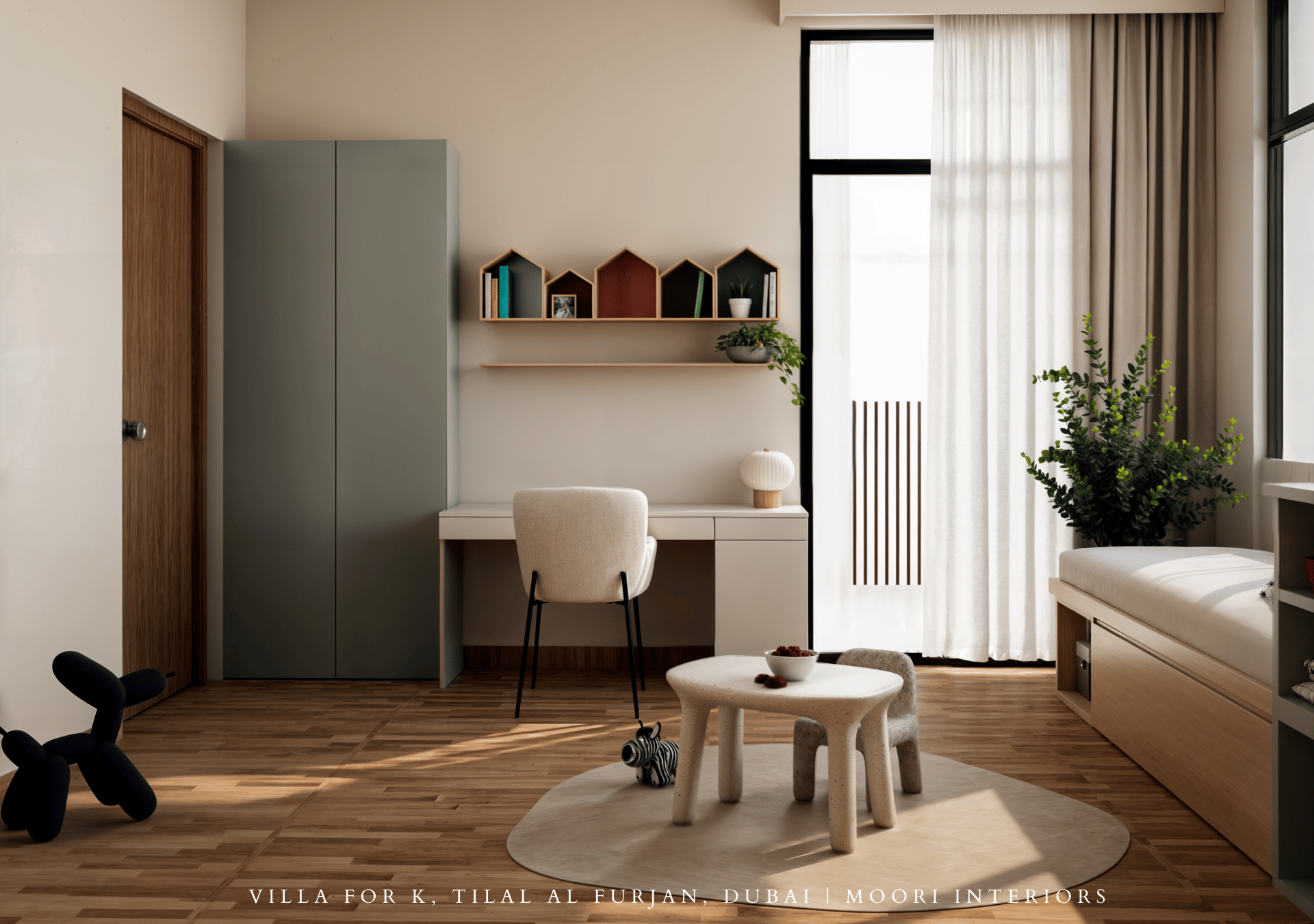
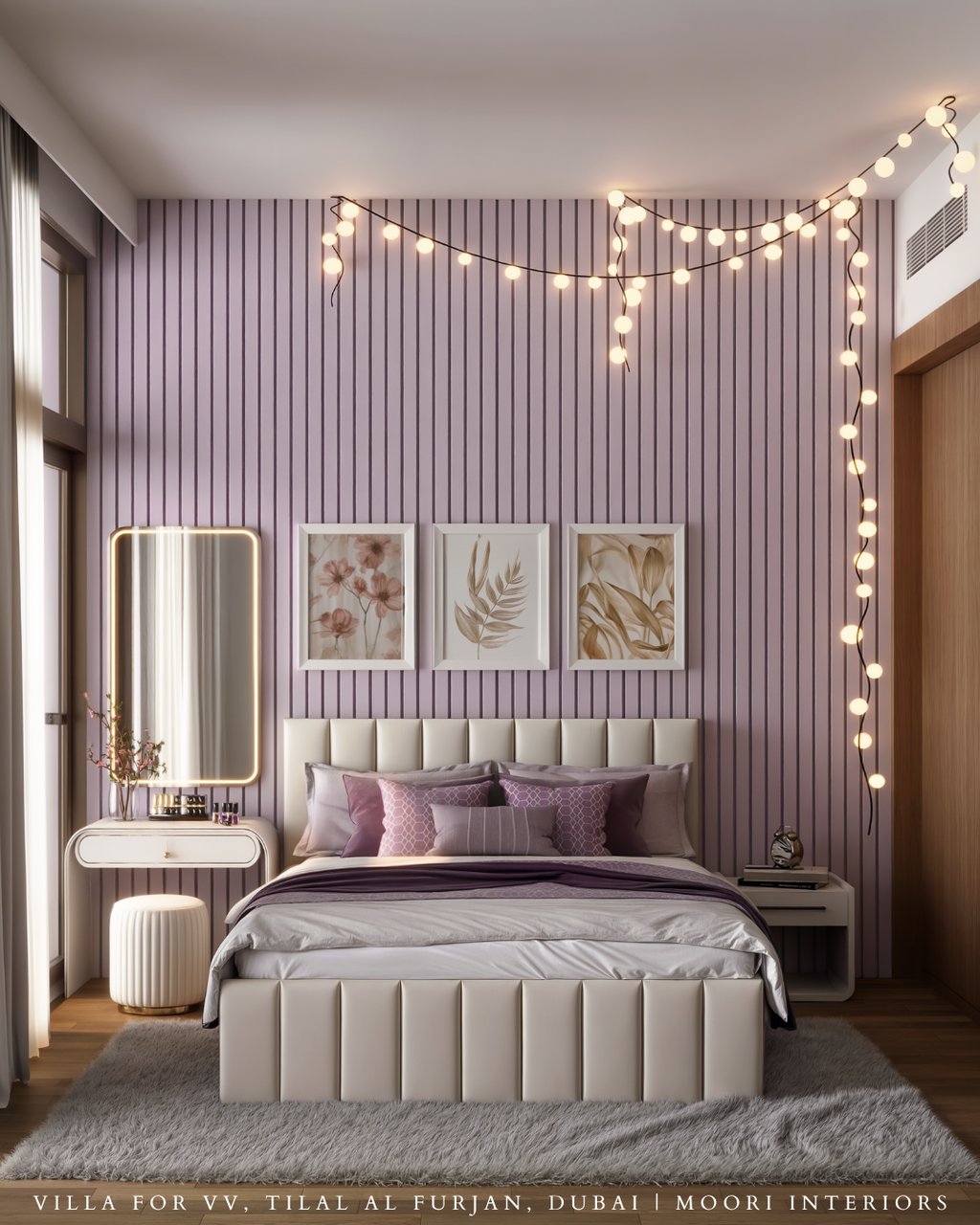
Functionality & Daily Usability
Functionality in a kids’ bedroom is defined by how effortlessly the room supports daily use. A functional room allows children to move through routines with minimal friction, adapt as needs change, and use the space independently without constant adult intervention.
Furniture as an Adaptive System
Furniture choices determine whether a kids’ bedroom evolves over time or becomes functionally obsolete within a few years.
Beds are the anchor of the room and should be considered first. Bunk beds, loft beds, and trundle configurations are effective in shared rooms or homes that frequently host guests. Lofted beds, in particular, can significantly increase usable floor area for study or activity zones.
However, adaptability should never come at the cost of spatial clarity. Overly complex bed systems often introduce visual bulk and circulation issues.
Study furniture must prioritise ergonomics over aesthetics. Desk height, chair support, and legroom directly affect posture, attention, and endurance. Adjustable desks and chairs allow the setup to evolve alongside the child.
Multi-functional furniture, such as beds with integrated drawers or benches with concealed storage, is most effective when it replaces existing elements. When used sparingly, it maintains visual calm while increasing utility.
Lighting as a Functional Layer
Lighting plays a critical role in how a kids’ bedroom functions throughout the day. Rather than relying on a single overhead source, effective lighting is layered to support different activities without overstimulating the space.
Ambient lighting establishes baseline comfort and spatial clarity. It should provide even, glare-free illumination across the room without harsh contrasts. In children’s bedrooms, ambient lighting is most effective when indirect or diffused, reducing visual strain and preventing overstimulation.
As a general guideline, ambient lighting levels should fall within a moderate illuminance range - bright enough for orientation and play, but restrained enough to maintain calm. Overly high light levels in rest spaces have been linked, in post-2020 environmental design studies, to increased restlessness and delayed wind-down in children.
Task lighting supports focused activities such as reading, studying, or creative work. Desk and bedside lights should deliver localised brightness without spilling into adjacent zones. Positioning is critical: light should fall from the opposite side of the writing hand and remain shielded from direct eye contact to prevent glare and eye fatigue.
Task lighting that is either too dim or excessively bright often results in compensatory behaviour such as children shifting positions, abandoning desks, or defaulting to screens as a light source which are all signals of design failure.
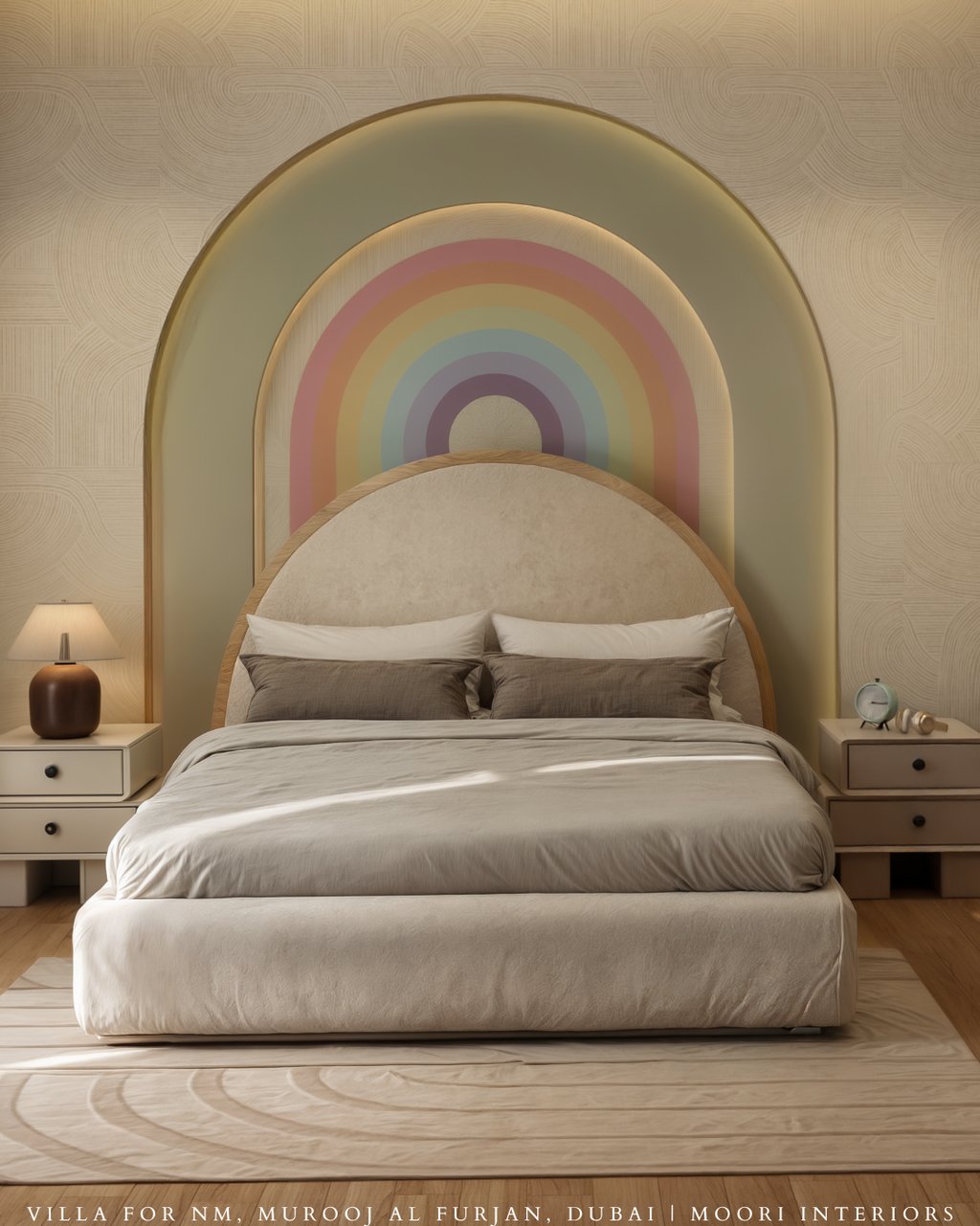
Accent lighting should remain restrained. Its role is to add warmth and spatial depth, not visual dominance. In kids’ bedrooms, accent lighting works best when integrated into joinery, headboards, or shelving, avoiding exposed fixtures that compete for attention.
Light Levels, Visual Comfort & Eye Health
Children’s eyes are still developing, making them more sensitive to glare, contrast, and poorly distributed brightness. Recent research in visual ergonomics emphasises that uniformity of light is as important as brightness itself. Sharp contrasts between bright task zones and dim surroundings increase visual strain and reduce sustained attention.
Balanced lighting where task zones are brighter but not isolated, and ambient levels support peripheral vision allows the eyes to work less to adapt, improving comfort over longer periods of use.
Colour temperature also plays a role. Cooler light may support short bursts of focus during the day, but warmer tones are more appropriate for evening use. Bedrooms that rely exclusively on cool-white lighting often feel alert but unsettled, making transition to rest more difficult over time.
Night-Time Lighting & Independent Navigation
For younger children, low-level night lighting near beds and circulation paths supports safe movement without fully activating the room. These lights should be directional and subdued, guiding movement rather than illuminating the entire space.
Across all age groups, lighting controls must be intuitive, reachable, and durable. When children can operate lighting independently, reliance on adults decreases and routines become more consistent.
Storage as Behavioural Infrastructure
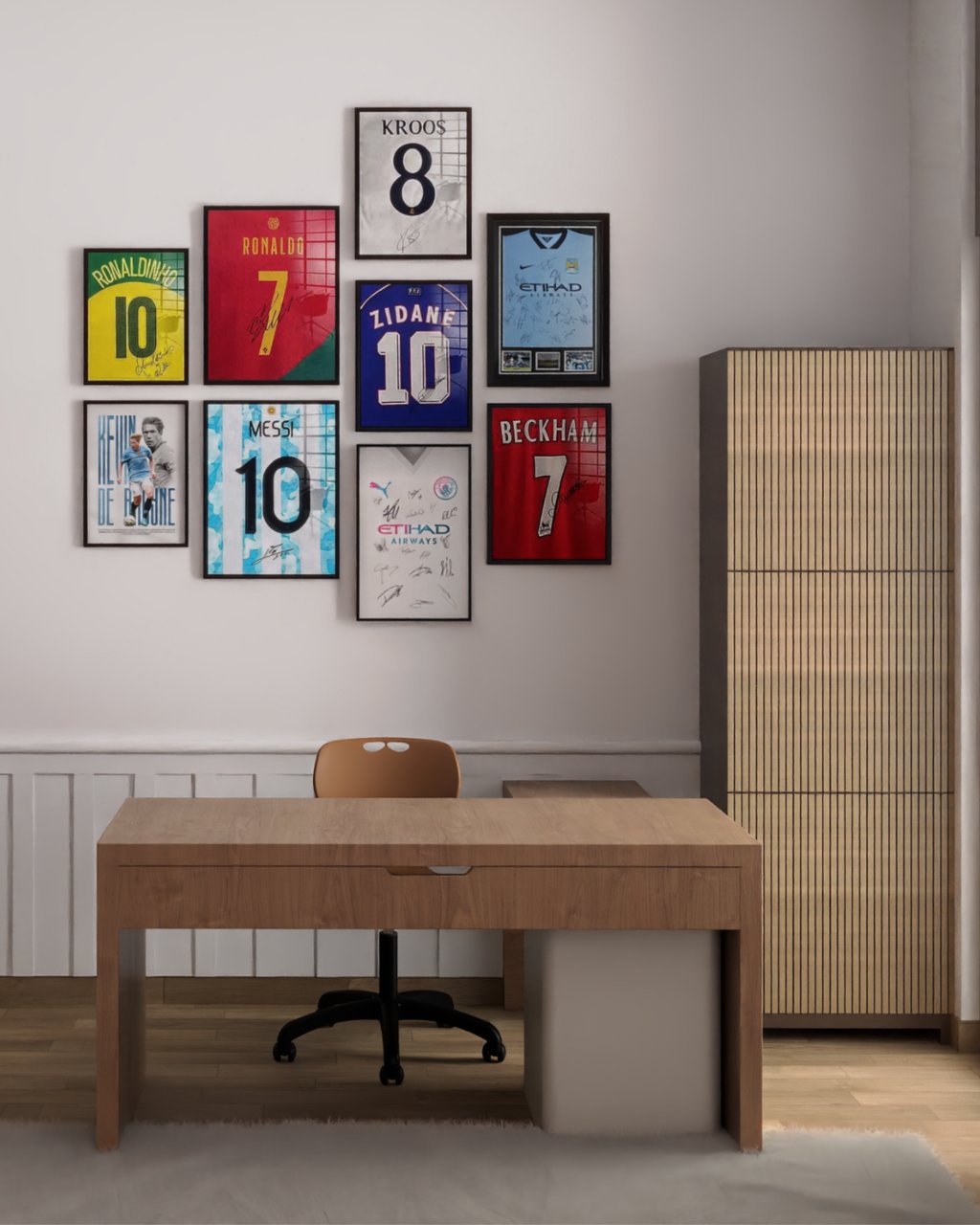
Well-designed storage systems support organisational habits not through instruction or enforcement, but through clarity, accessibility, and spatial logic.
Designing Storage Children Can Actually Use
In children’s spaces, accessibility is as critical as capacity. Storage that requires adult assistance like high shelving, heavy drawers, deep cabinets, or overcomplicated systems inevitably leads to items being left out. The result is not only visual clutter, but increased safety risk and daily frustration.
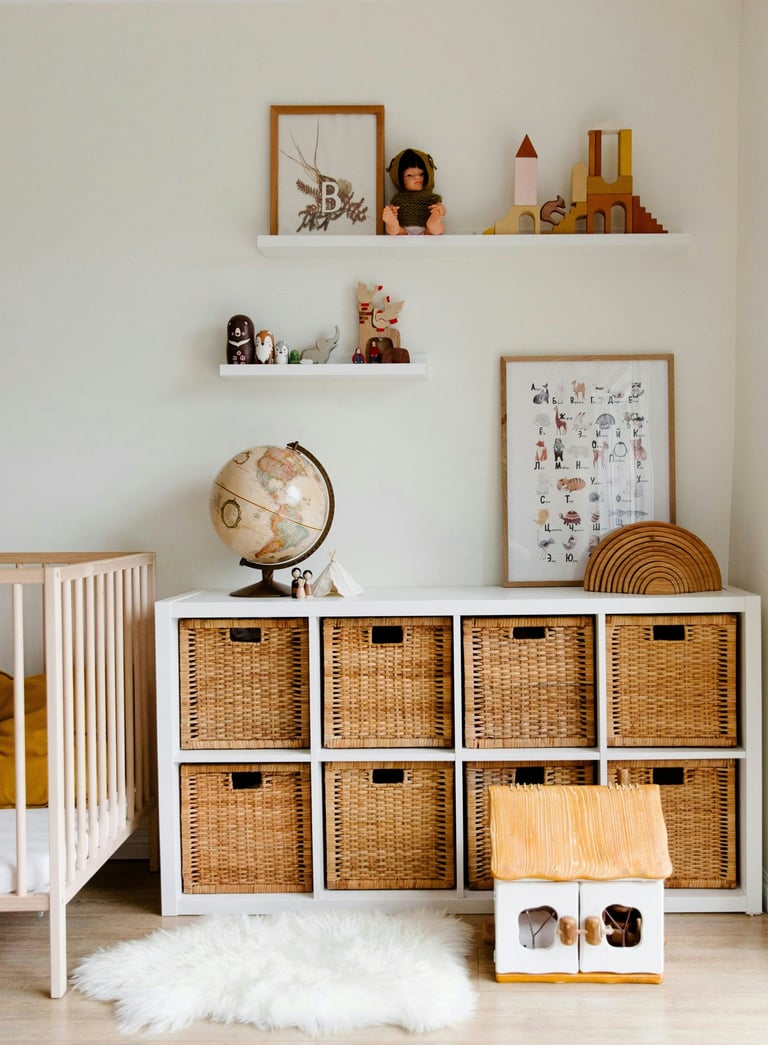
Low-level drawers, open cubbies, and pull-out bins allow children to interact directly with their belongings. When storage aligns with a child’s physical reach and motor ability, tidying becomes a natural extension of use rather than a separate task. This supports early habit formation around categorisation and order through ease, not enforcement.
As children grow, these systems can scale vertically or shift in function, maintaining usability without requiring a complete redesign.
Distributed Storage Over Centralised Units
Rather than relying on a single large wardrobe or cabinet, kids’ bedrooms can use distributed storage , placing smaller storage elements in direct relationship to how the room is used.
Books near beds or study areas
Toy storage adjacent to play zones
Clothing storage aligned with dressing routines
This approach reduces unnecessary movement and decision fatigue, particularly during transitions such as mornings, homework time, or bedtime.
From a design perspective, distributed storage also prevents any one element from becoming visually dominant, supporting a more balanced and legible layout.
Open vs Closed Storage
Open shelving is valuable for frequently accessed items and select display pieces, but excessive exposure creates constant sensory stimulation.
Closed storage systems such as drawers, cabinets, and concealed compartments help reduce visual noise, allowing the room to feel calmer and more controlled.
Visual Design: Colour, Theme & Identity
Visual design sets the emotional register of a child’s bedroom, but its impact is often misunderstood. Colour, pattern, and imagery function as decoration and also shape attention, behaviour, and how long a space remains relevant.
Environmental design research findings consistently indicate that it is not brightness or colour itself that overwhelms children, but density, contrast, and visual competition. Rooms with too many dominant elements reduce the space’s ability to support rest , focus and long-term adaptability.
Palette Strategy
Rooms designed entirely around bold colour schemes or highly specific palettes tend to age quickly. This is not only an aesthetic concern, but a functional one: as children grow, their tolerance for visual intensity often decreases, while their desire for control and adaptability increases.
A more resilient approach begins with:
Soft, neutral base palettes that reflect light gently and age well
Mid-tone or muted hues that provide warmth without dominating the space
Accent colours are most effective when introduced through elements that are:
Easy to update (artwork, cushions, rugs, textiles)
Visually contained rather than spread across large surfaces
Themes
Highly literal themes whether character-driven or stylistically rigid often create visual saturation and shorten the functional lifespan of a room. They can also limit a child’s sense of ownership once interests shift, which typically happens sooner than expected.
A more durable approach is interpretive theming:
Referencing interests through colour, texture, or motif rather than imagery
Allowing multiple interests to coexist without visual conflict
Avoiding single-focus narratives that dominate the room
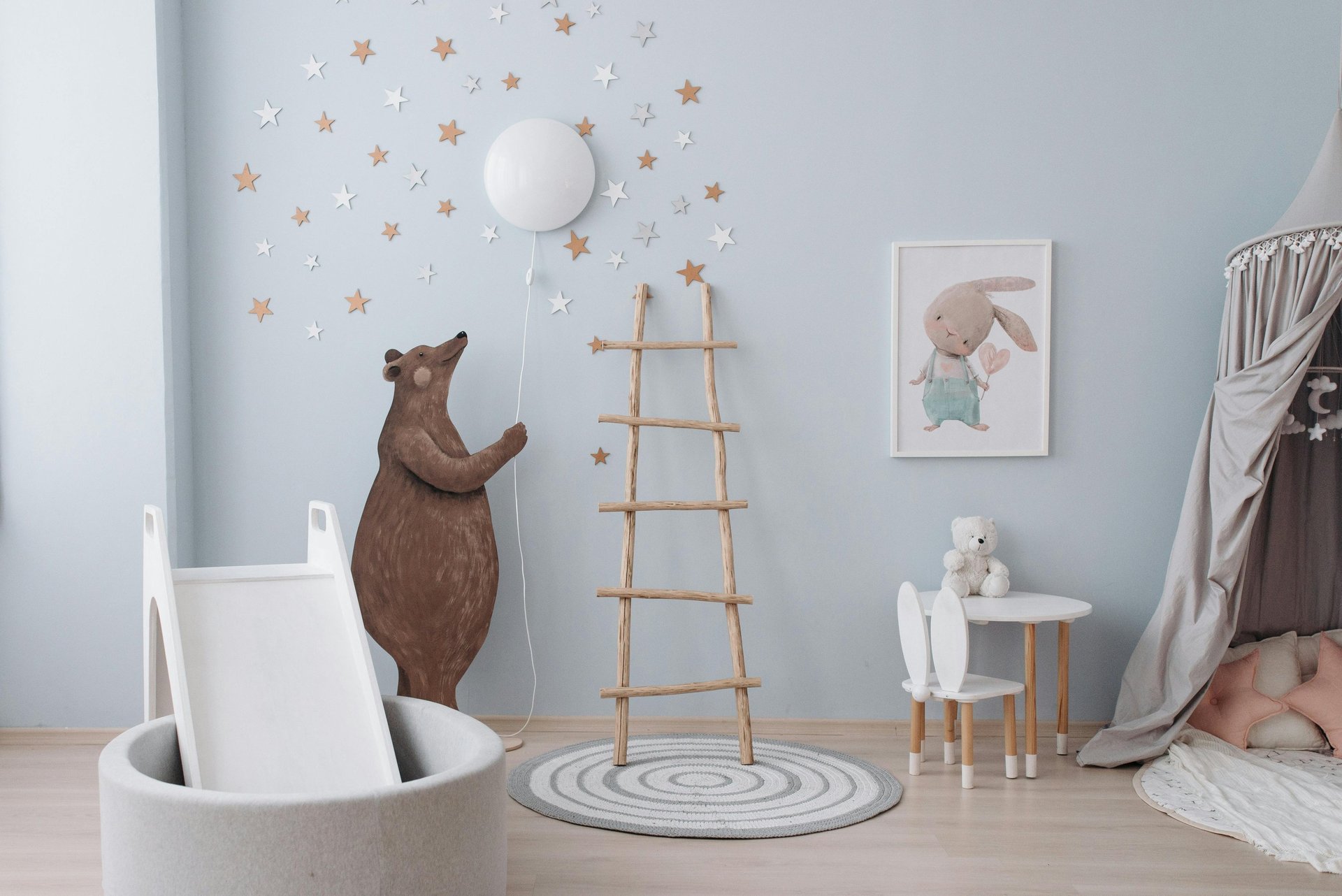
For example, a fascination with space does not require murals or decals on every surface. Subtle references through artwork, materials, or graphic elements maintain flexibility while still feeling personal.
This approach aligns with current design research showing that spaces with lower thematic intensity support longer engagement and easier transition as interests change.
Visual Hierarchy
One of the most overlooked aspects of kids’ bedroom design is visual hierarchy. When every surface competes for attention - patterned walls, colourful furniture, graphic bedding, open shelving, the room loses its ability to rest.
Effective visual design establishes:
One or two areas of emphasis
Supporting elements that recede visually
Clear zones of visual quiet
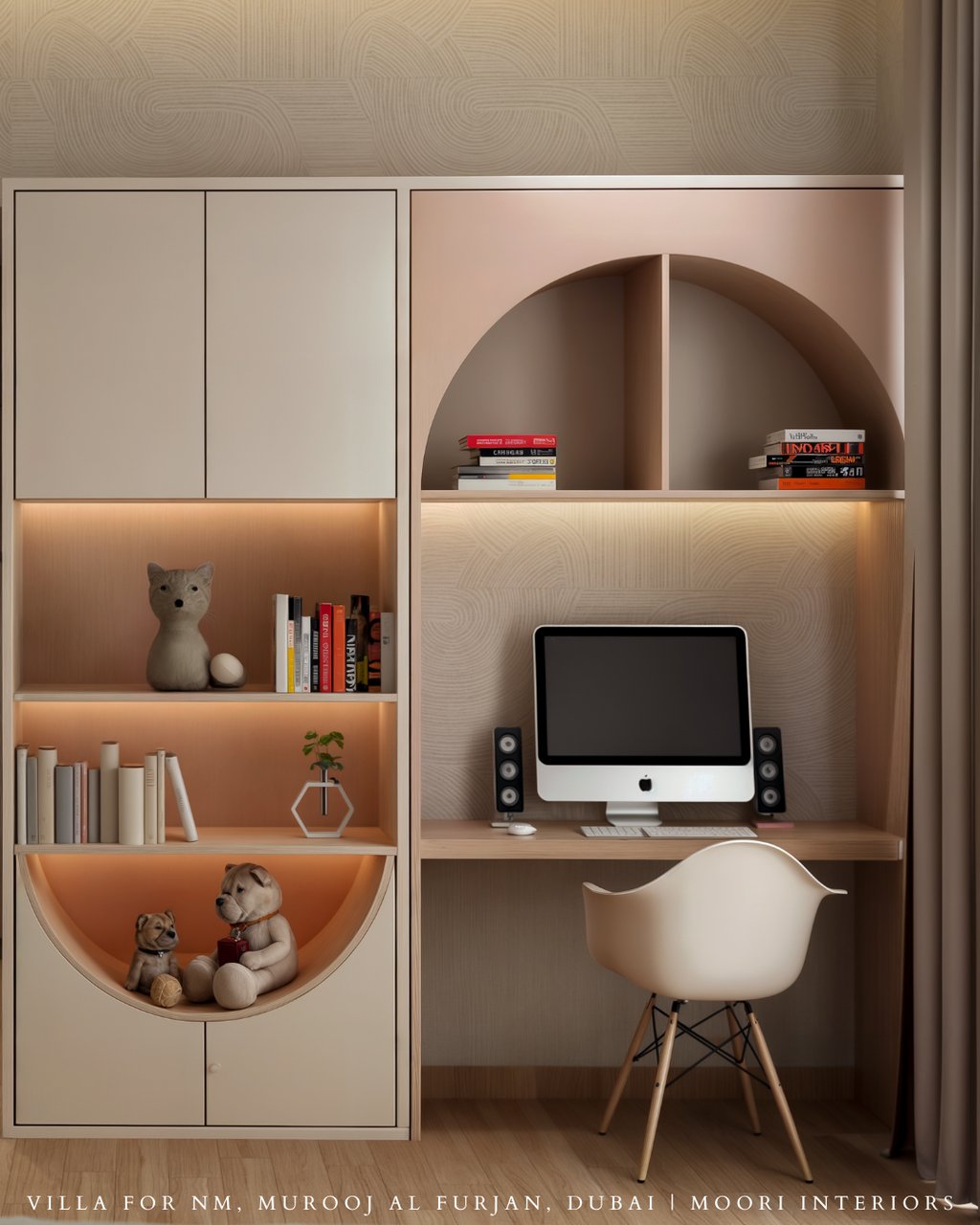
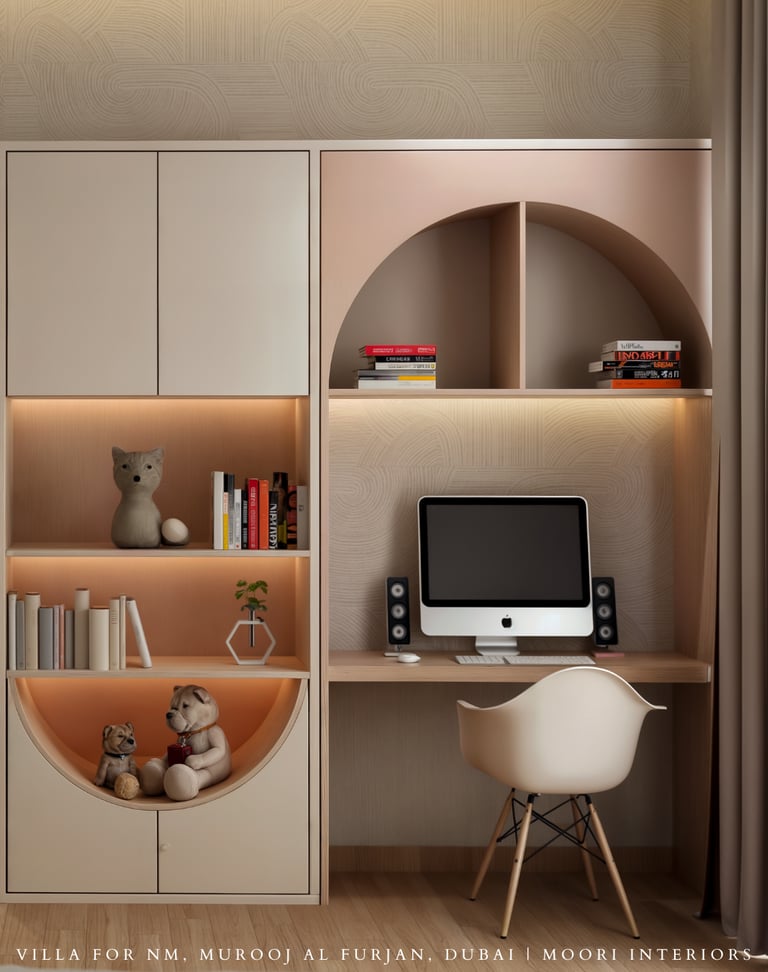
Walls, in particular, benefit from restraint. Treatments such as removable decals, partial murals, wallpaper panels allow visual interest without overwhelming the room.
Personalisation as Identity
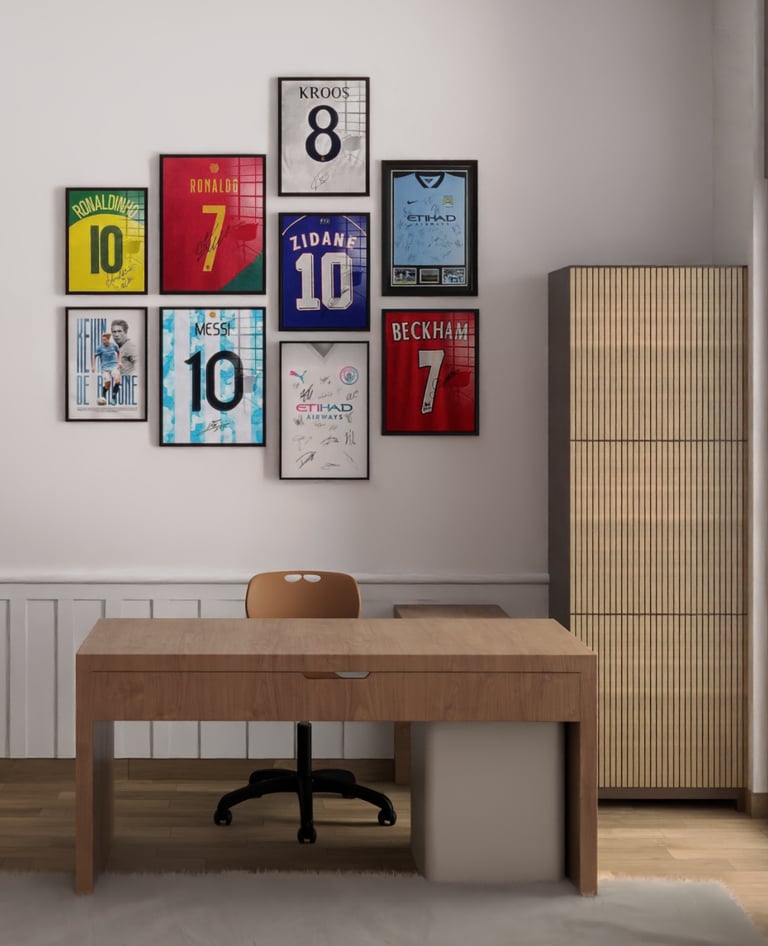
Personalisation is most successful when it reflects authentic engagement. Displaying artwork, collections, certificates, or creative output gives the room emotional relevance without relying on overt styling.
Research into learning and attention environments shows that personally meaningful visuals are processed differently from decorative ones. They tend to reinforce familiarity and belonging rather than compete for attention.
Designing designated display zones rather than distributing personal items across the room, keeps identity visible while preserving overall visual order.
When visual design is planned this way:
The room adapts easily as interests change
Redesign cycles are reduced
The space supports both expression and rest

Care and Maintenance
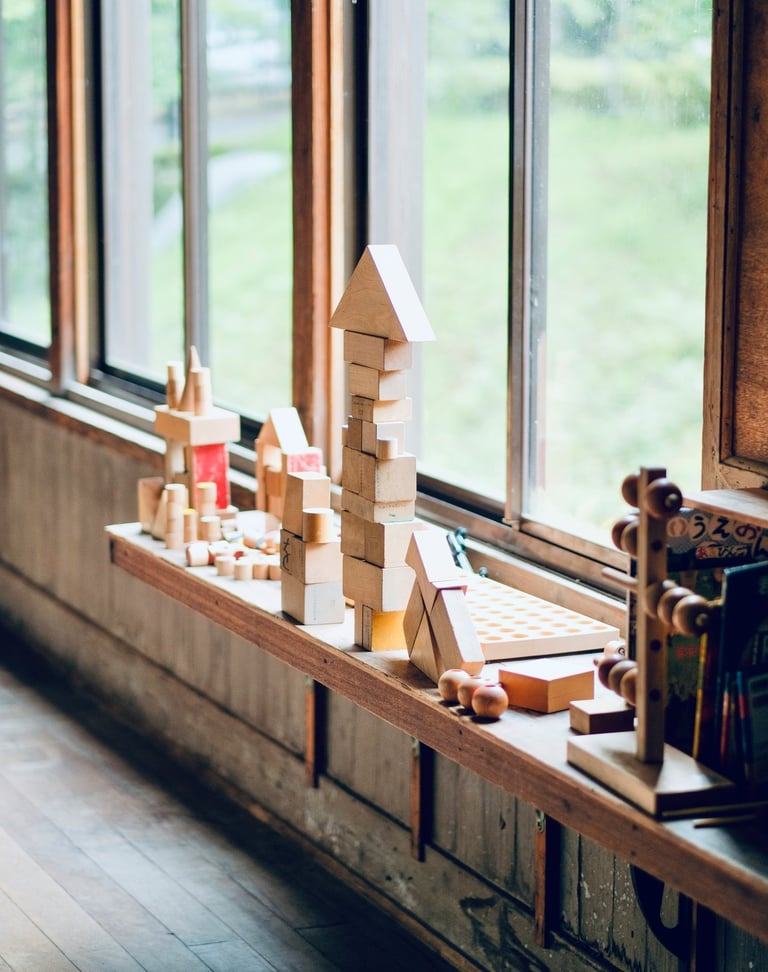
Kids’ bedrooms experience more movement, impact, and daily wear than almost any other space in a home. For this reason, care, safety, and material choices cannot be treated as secondary considerations or finishing layers. They must be embedded into the design from the outset.
Most wear in children’s bedrooms comes from repeat contact zones:
Walls near beds accumulate marks from hands, feet, and headboards, especially in younger children who move during sleep.
Desk and study areas collect pencil marks, ink stains, craft residue, and scuffing from chair movement.
Floor zones near storage and play areas take the most impact — toys being dropped, dragged, or pushed repeatedly.
Handles, switches, and drawer fronts show wear early due to constant touch and inconsistent hand cleanliness.
Soft furnishings absorb spills, food crumbs, sweat, and dust, particularly in multi-use rooms where play and rest overlap.
Designing without accounting for these realities often leads to spaces that look worn far sooner than expected.
Material selection in a child’s bedroom is a functional decision. These spaces experience higher levels of movement, impact, and cleaning than most rooms in a home, requiring materials that balance durability, comfort, and long-term maintenance.
Walls
Walls are high-contact, high-visibility surfaces, particularly near beds, desks, and circulation paths. Washable, scrub-resistant paint finishes are essential to allow marks to be removed without patchiness or sheen variation.
In study or activity-heavy rooms, integrating more durable surfaces such as joinery panels, wipeable laminates, or low-level wall protection can significantly reduce wear. These should be incorporated subtly to maintain visual continuity rather than appear as applied safeguards. Wallpaper, murals, or textured finishes are best limited to areas with minimal physical contact, where visual interest does not compromise maintenance.
Flooring
Flooring must withstand impact, movement, and frequent cleaning while remaining comfortable underfoot. Hard-wearing options such as laminate or high-quality vinyl offer durability and ease of care in active environments.
Softness is most effective when introduced selectively. Area rugs provide acoustic comfort and warmth in play or rest zones while remaining replaceable over time, avoiding full-room materials that trap dust, stain easily, or wear unevenly. The aim is a floor system that absorbs daily use quietly without becoming visually tired or high-maintenance
Joinery & Furniture Finishes
Joinery, drawer fronts, and wardrobes are among the most frequently handled elements. Finishes should resist fingerprints, scuffing, and abrasion while tolerating regular cleaning.
Matte or lightly textured finishes typically perform better than high-gloss surfaces, concealing wear more gracefully over time. Laminates and engineered finishes should be assessed not only for durability, but for how consistently they age. Hardware must operate smoothly and withstand daily use without loosening or jamming.
Soft Furnishings
Soft furnishings add comfort but must remain practical. Curtains, cushions, upholstered benches, and headboards should prioritise tightly woven fabrics, removable covers, and finishes suitable for frequent cleaning
These elements are best treated as serviceable layers rather than permanent features. Overly delicate textiles or materials requiring specialist care often discourage maintenance, accelerating visible wear.
Health, Safety & Longevity
Across all materials, non-toxic finishes and child-safe specifications are non-negotiable. Low-VOC paints, safe adhesives, and certified materials support indoor air quality, particularly important in bedrooms where children spend extended periods.
Ultimately, material success is measured by how the room performs over time. When materials are selected for resilience, cleanability, and forgiveness, the space remains composed through growth, change, and daily life allowing the design to mature alongside the child without constant intervention.
Material Choices That Support Daily Life
Safety
Effective safety in a child’s bedroom emerges from predictable layouts, intuitive movement, and stable elements. Clear circulation paths reduce the likelihood of trips and collisions, particularly during active play or night-time movement.
Key safety principles are best resolved at a planning level:
Beds positioned away from windows and hard edges
Anchored storage units that remain stable over time
Rounded or softened furniture profiles in high-use areas
Electrical points and lighting located outside primary play zones
Designing for Change Across Age Groups
Safety and care requirements evolve as children grow, and a well-planned bedroom anticipates these shifts rather than reacting to them.
As children grow older, different considerations take precedence. Study furniture must allow comfortable movement and proper posture. Storage systems and wardrobes should be securely anchored, particularly as loads increase over time. Lighting and electrical planning should support longer study hours without interfering with rest.
Across all age groups, details such as non-slip rugs, stable joinery, and subtle night-time lighting along circulation paths contribute to everyday ease and confidence within the space.
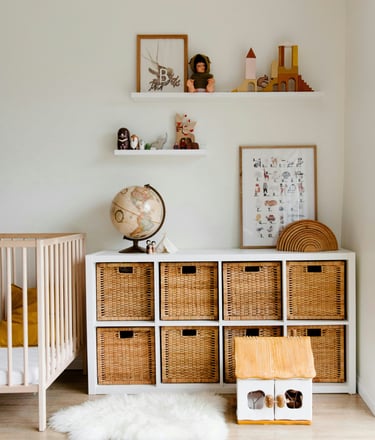
A well-designed kids’ bedroom is a flexible framework , one that supports daily routines, independence, and creative expression as childhood evolves.
At Moori Interiors, we approach children’s bedrooms through foresight rather than decoration. By prioritising understanding, spatial clarity, usability, and durable material choices, we create environments that adapt naturally over time. Thoughtful planning reduces the need for frequent redesign, while maintaining safety, comfort, and visual cohesion within the home.
When structure and flexibility are carefully balanced, the room begins to work quietly in the background supporting focus, rest, and autonomy without constant intervention.
Conclusion
Address:
Office No: 304 , Building A1
Emirates Sports Hotel Apartments
Opposite Fit Republik, Sports City
Dubai, United Arab Emirates
Contact:
+971 553532729
sooraj@moori.ae