
Rugs
Discover essential interior design principles for luxury spaces in Dubai. Learn how to create timeless, elegant, and personalized interiors with expert insights tailored to Dubai’s high-end residential market.
In luxury interiors, rugs function as both collected objects and spatial tools. They are often chosen for craftsmanship, material quality, provenance, or personal preference, yet their final value is also shaped by how they sit within a space.
Before furniture is arranged, a rug already begins to shape the spatial narrative of a room. It introduces scale, sets a material tone, and establishes a visual foundation that other elements respond to. This makes it one of the few interior elements that carries both emotional and structural weight at the same time.
As residential design continues to move towards open layouts, restrained palettes, and material-driven spaces, rugs have become part of the early design conversation rather than a finishing layer placed at the end.
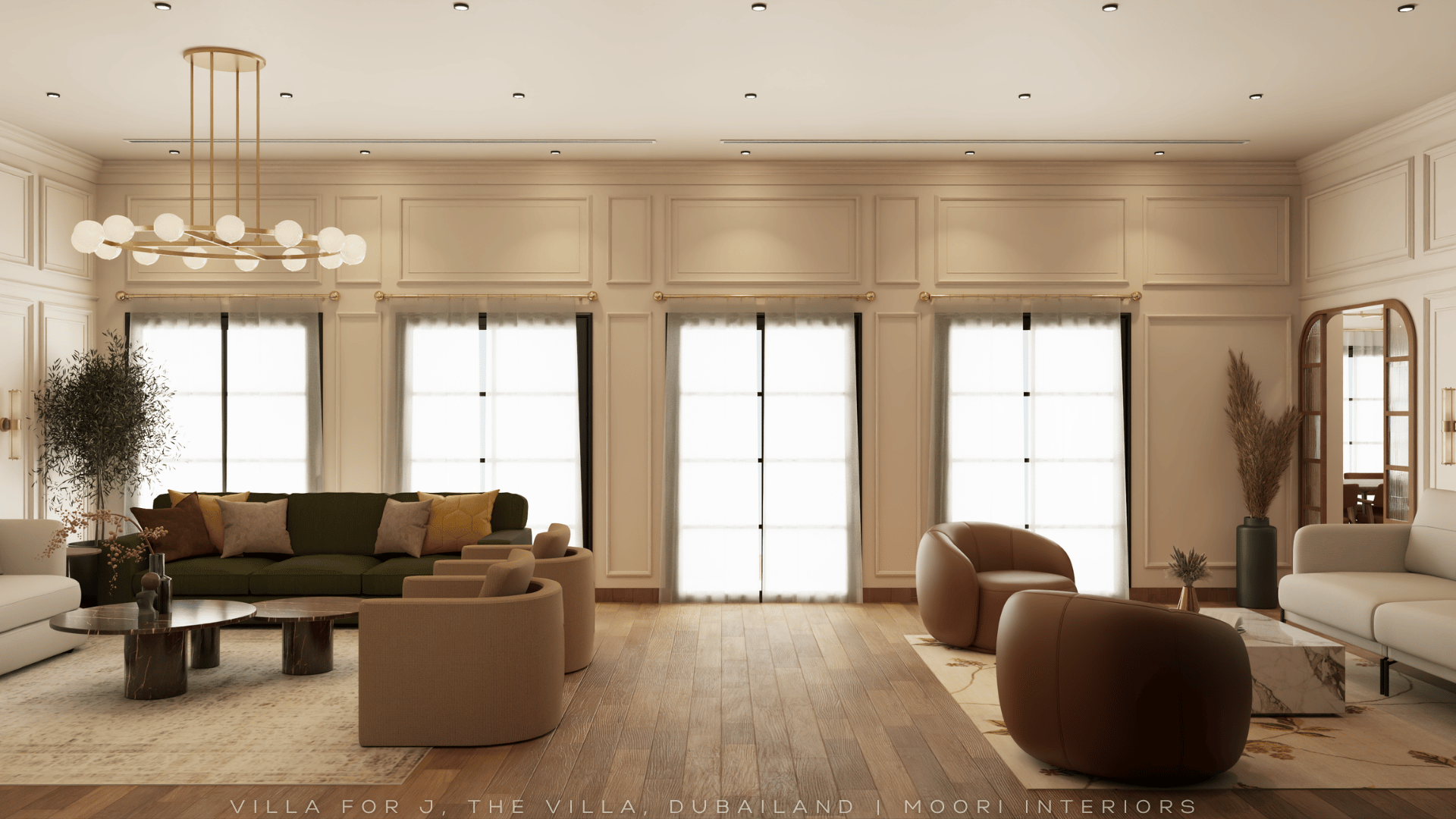
In many luxury homes, rugs also exist outside of functional logic. Certain pieces, particularly hand-knotted or vintage rugs, are treated as collected objects with cultural and artistic value.
These are often selected for their craftsmanship, origin, or detailing in the same way one would choose an artwork. In such cases, the rug is not secondary to the room design but a starting point, with surrounding furniture and materials responding to it.
This dual nature is what makes rugs unique. They can operate as part of the spatial structure of a room while also holding standalone aesthetic value.
Rugs as Objects of Art
Rugs sit at the intersection of design and architecture in a way few other elements do. In most interiors, they are doing quiet structural work before any decorative styling is considered.
Define zones without walls
In open-plan homes, especially in villas and modern apartments, rugs are one of the simplest ways to create separation between areas without building physical barriers. A living area, dining space, or reading corner can be clearly defined through the floor plane while keeping the overall space open and connected.
This is especially important in contemporary layouts where flow and openness are a priority, but each function still needs its own identity.
Anchor furniture groupings
Furniture works best when it reads as one complete arrangement rather than separate pieces. A rug is what ties sofas, chairs, and tables together so they feel intentionally placed within a single composition.
Without that base, furniture can feel slightly disconnected, even if each piece is well designed. With the right rug, the entire setup feels grounded and cohesive.
Control visual scale of a room
Rugs have a direct impact on how a space is perceived in terms of size and proportion. A rug that is too small can make a room feel broken up, while a correctly scaled rug brings everything into balance.
Add softness to hard architecture
Modern homes often use materials like stone, glass, metal, and polished finishes. These create clarity and structure, but they can also make a space feel visually rigid if there is no balance.
Rugs introduce that balance. They soften the base of the room and reduce visual harshness without taking away from the architectural intent.
Introduce warmth and depth
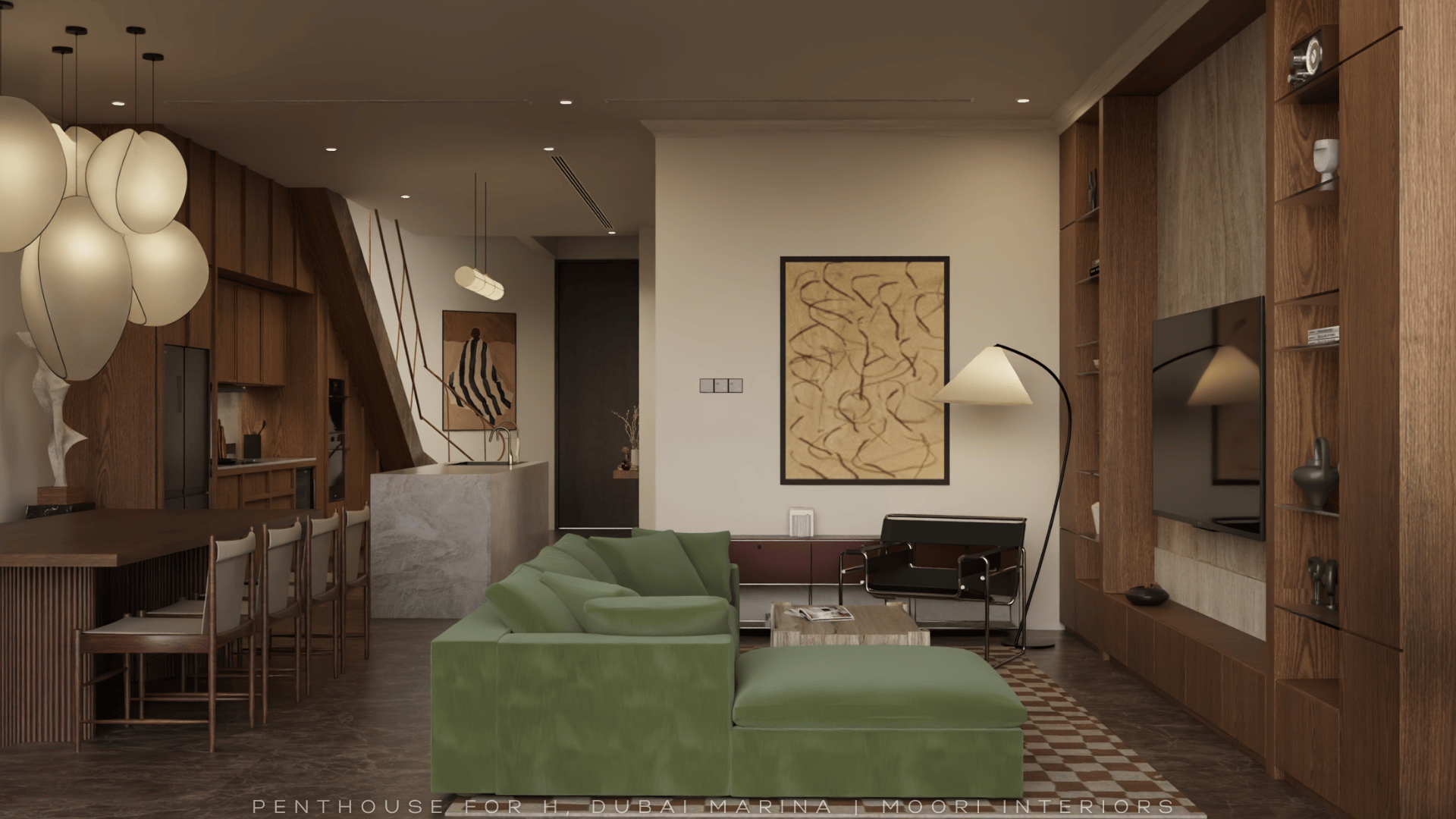
Rugs add warmth underfoot and bring texture, tone variation, and layering into the room.
Even in neutral or minimal interiors, a rug is often what stops a space from feeling flat. It adds a sense of depth that comes from material and surface variation.
What Rugs Do to a Space
Choosing the Right Rug Type
A well-composed interior leads the eye fluidly across a room. This is the principle of rhythm—a subtle but essential force in design. Rhythm connects objects, textures, and forms through repetition, progression, or contrast, establishing continuity and visual movement.
Material
Material affects how the rug feels, how it wears over time, and how it holds its visual integrity.
High-grade wool, particularly hand-spun variants such as kurk or lamb wool, is widely used in premium rugs for a reason. It is naturally resilient, holds its structure under regular use, and develops a softer finish over time without losing strength.
Silk, or wool-silk blends, are used where a finer level of detail is required. Silk fibres are thinner, which allows for sharper patterns and a subtle sheen that changes with light. This is often what gives certain rugs their depth and visual richness.
Natural fibres and dyes are also a key marker of quality. Beyond sustainability, they influence how a rug ages. Instead of fading flatly, natural dyes tend to mellow gradually, which is why older, well-made rugs often retain character rather than looking worn out.
In most high-end applications, wool forms the base for durability, silk is introduced for refinement, and blends are used to balance both.
Rugs used in high-end interiors are generally selected from a few key categories that balance material quality, visual impact, and how the space is meant to be used.
Heritage Hand-Knotted Rugs
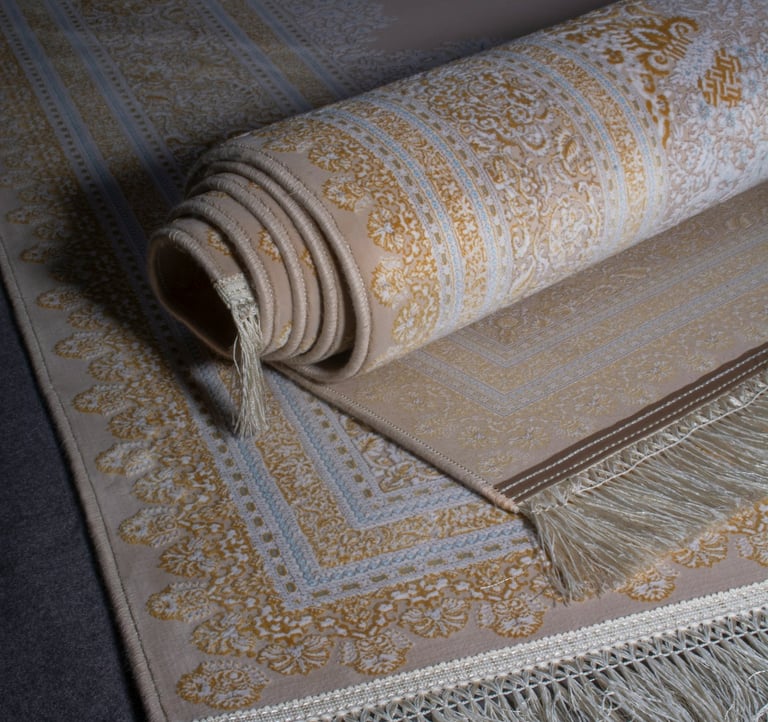
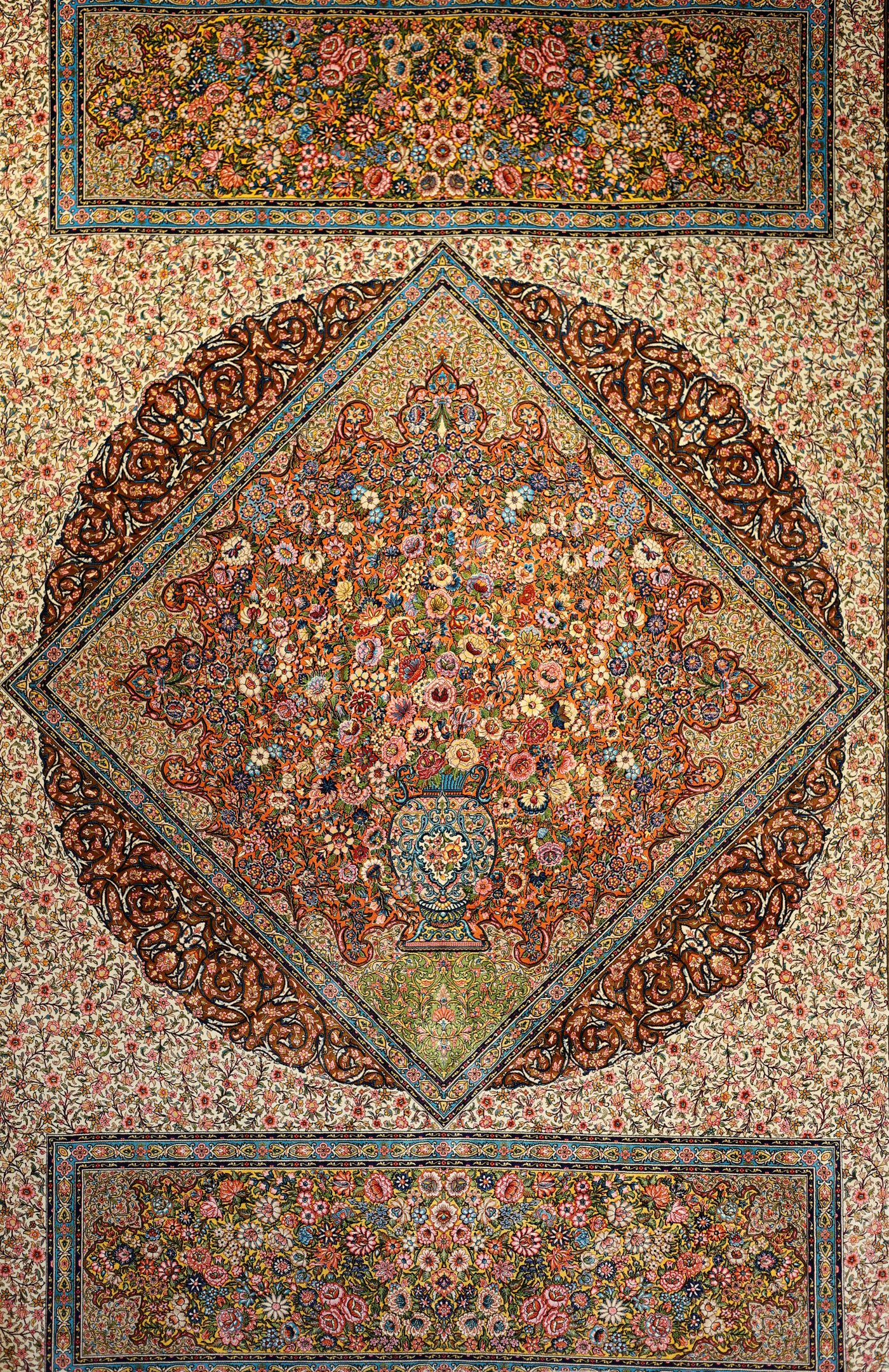
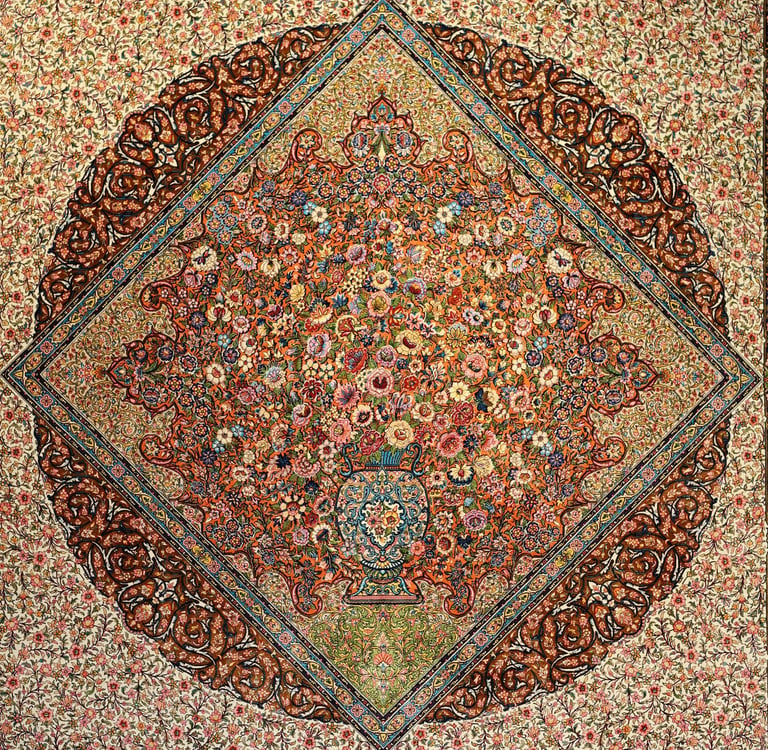
Hand-knotted rugs are traditional, often originating from regions such as Iran, India, and Turkey and made over extended periods and carry a level of detail that cannot be replicated mechanically.
They are typically used in formal living areas or spaces where the rug is expected to hold visual weight. The depth of pattern and colour allows them to function as a central element within the room rather than a background layer.
Textural Natural Rugs
Rugs in this group are often wool-based, sometimes blended with cotton, and are defined by their tactile quality. They are commonly used in modern interiors where the palette is restrained and the emphasis is on layering through texture. The effect is subtle but important, especially in spaces that rely on material contrast to create interest.
Contemporary Designer Rugs
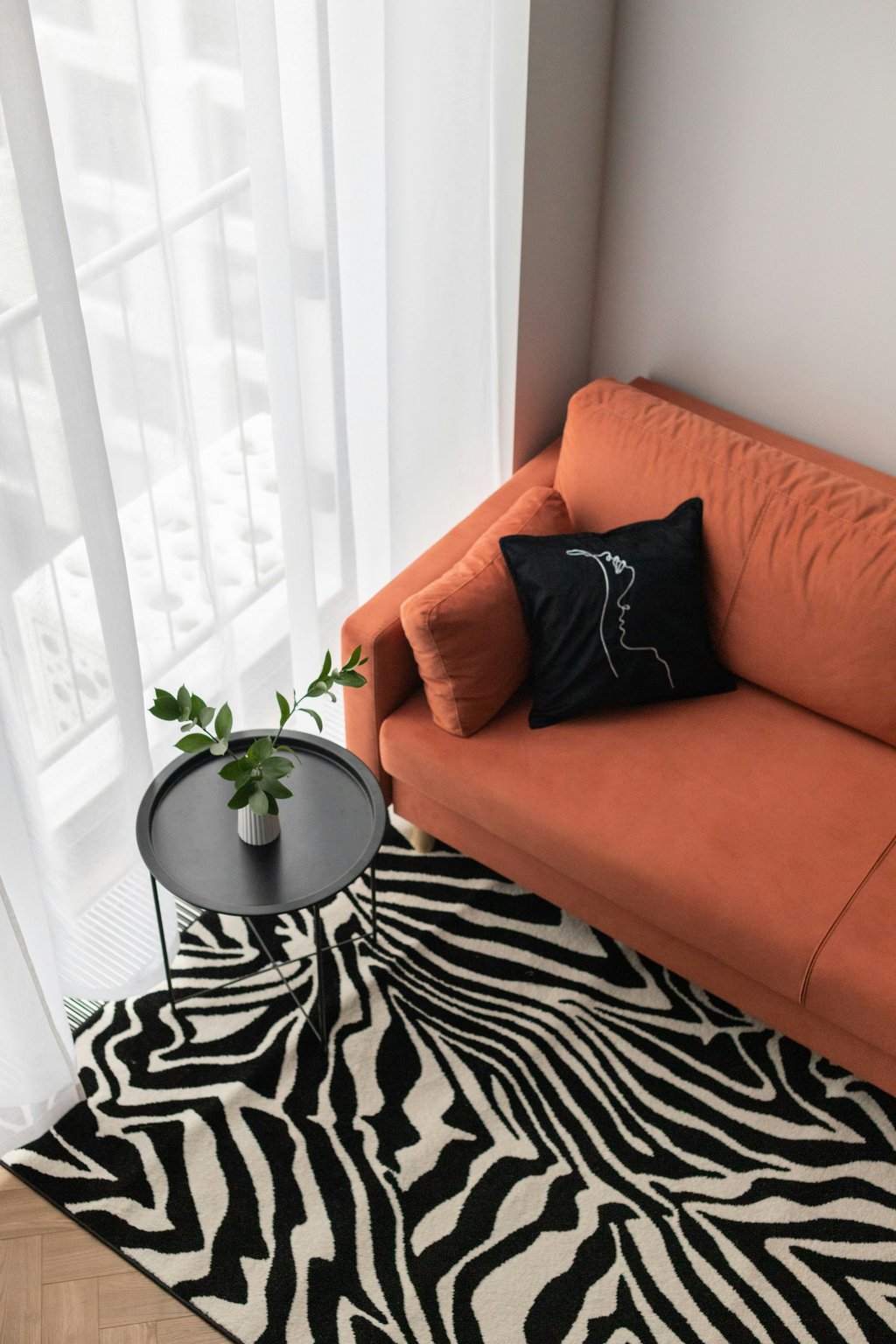
These rugs are design-led and often developed as part of a broader interior concept. Patterns tend to be abstract, geometric, or tonal, with a controlled use of colour. They work well in spaces where the architecture and furniture are already strong, and the rug is used to reinforce that structure rather than compete with it. This category is widely used in newer residential projects and high-end apartments.
Flatweave and Lightweight Rugs
Flatweaves such as kilims and dhurries have seen a strong resurgence in recent years, particularly in contemporary interiors. They are lighter, lower in pile, and easier to maintain. Their appeal lies in their versatility. They can be used in both formal and informal settings, and they sit well in spaces where a heavier, more traditional rug might feel excessive.
New-Age and Performance Rugs
Advancements in material technology have introduced a newer category of rugs designed for durability and ease of use. These include high-performance fibres, recycled materials, and blends that are resistant to staining, fading, and wear. While they are machine-assisted in production, their design and application are increasingly aligned with high-end interiors, particularly in homes where practicality is a priority without compromising on appearance.
Design Styles
Alongside material and construction, design style plays a defining role in how a rug is perceived within a space.
Persian rugs are known for their intricate detailing, central medallions, and rich colour palettes. They are often used in more formal or layered interiors where the rug is intended to stand out.
Turkish and broader Oriental rugs tend to feature a mix of geometric and floral motifs with a slightly more structured layout. They transition well between classic and contemporary settings.
Afghan and tribal rugs are typically deeper in tone with bolder, more repetitive patterns. They are often used to introduce contrast and add character to a space.
Moroccan rugs are generally lighter in palette with softer, more minimal patterns. They are widely used in modern interiors where texture is preferred over visual complexity.
Contemporary and abstract rugs are driven by design rather than tradition. They range from minimal compositions to bold statements and are commonly used in architectural spaces where the rug needs to align with a more modern design language.
These styles are not rigid categories, but they provide a useful reference when selecting a rug that aligns with the overall direction of a space.
Method of construction
Hand-knotted rugs remain the highest standard. Each knot is tied individually, often over several months or even years depending on the size and complexity. This process allows for precision in pattern, consistency in structure, and a level of durability that machine production cannot replicate.
Knot density is another important factor. A higher knot count allows for finer detailing and more intricate designs, which is why it is often used as a benchmark when assessing quality.
Machine-made rugs are widely available and can be visually similar at first glance, but they do not offer the same level of craftsmanship or longevity. In high-end residential projects, they are typically not considered within the same category as hand-crafted pieces.
Types of Rugs
Rug placement shifts depending on how a space is used. The same piece can read completely differently across rooms, so the approach is always contextual rather than formulaic.
Living Room
Rugs by Space
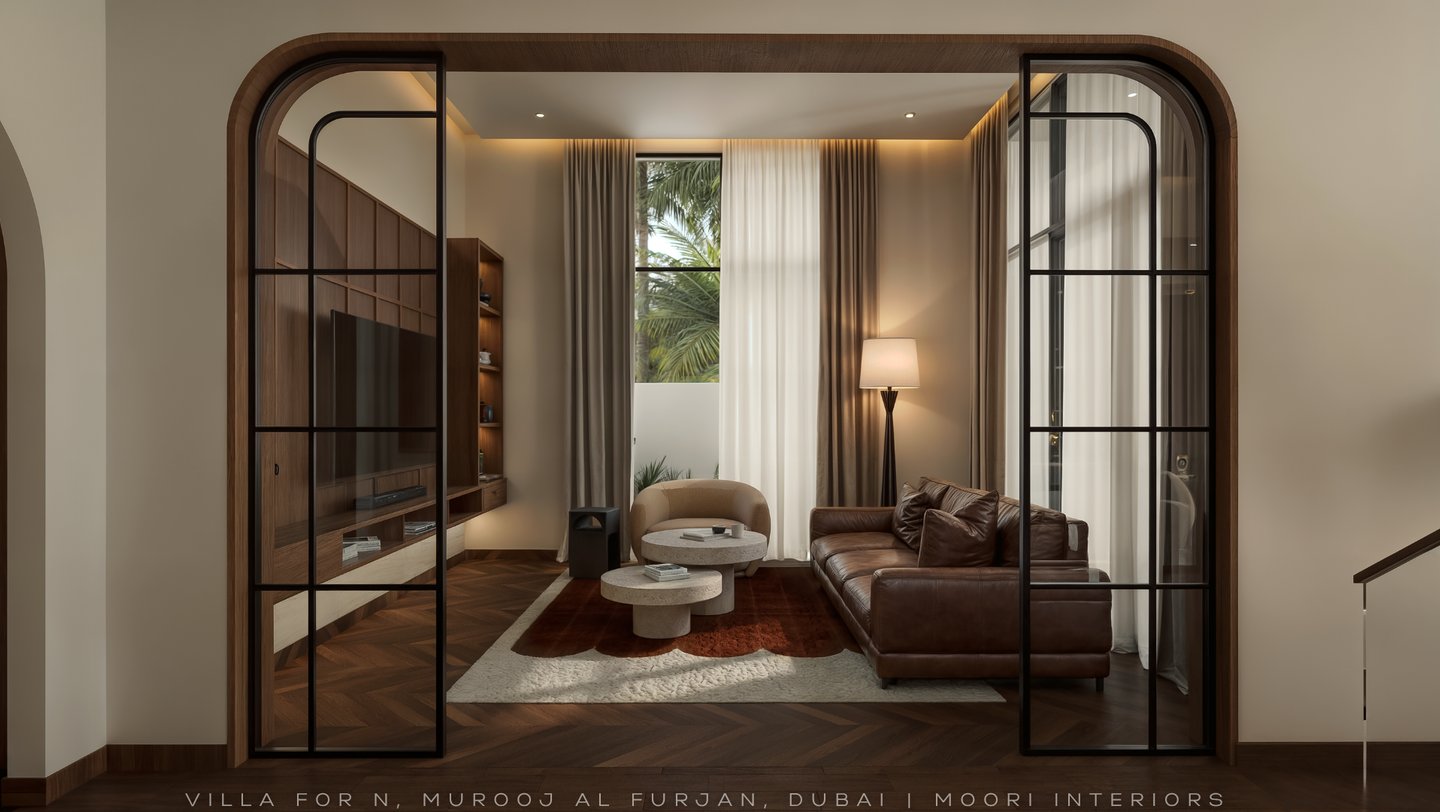
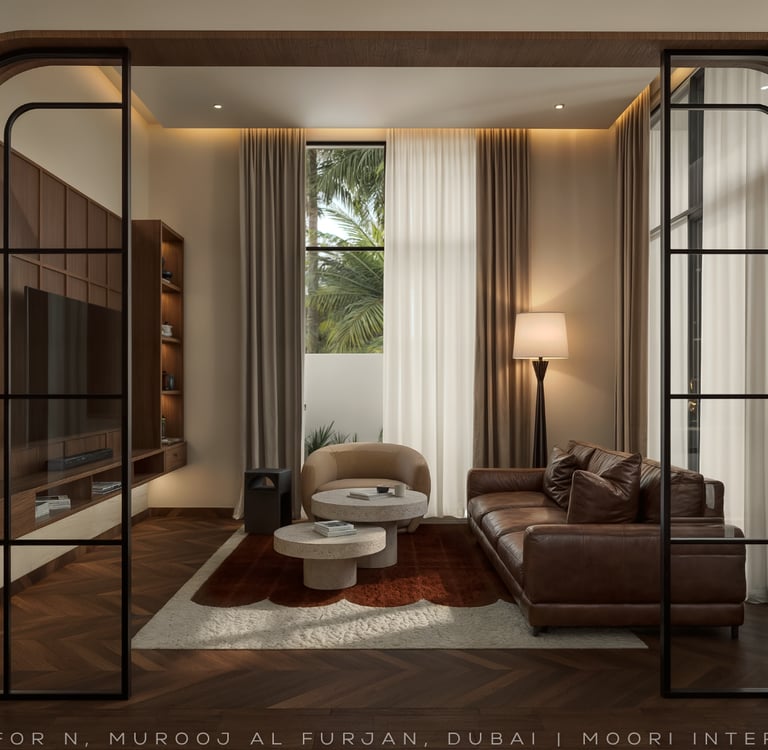
In living areas, rugs are primarily read in relation to the seating layout. Larger rugs that extend beyond the sofa create a more expansive, composed look, while tighter placements feel more compact and conversational. In more formal settings, the rug often carries pattern and colour, whereas in contemporary spaces it tends to sit back, allowing furniture and finishes to lead.
Bedroom
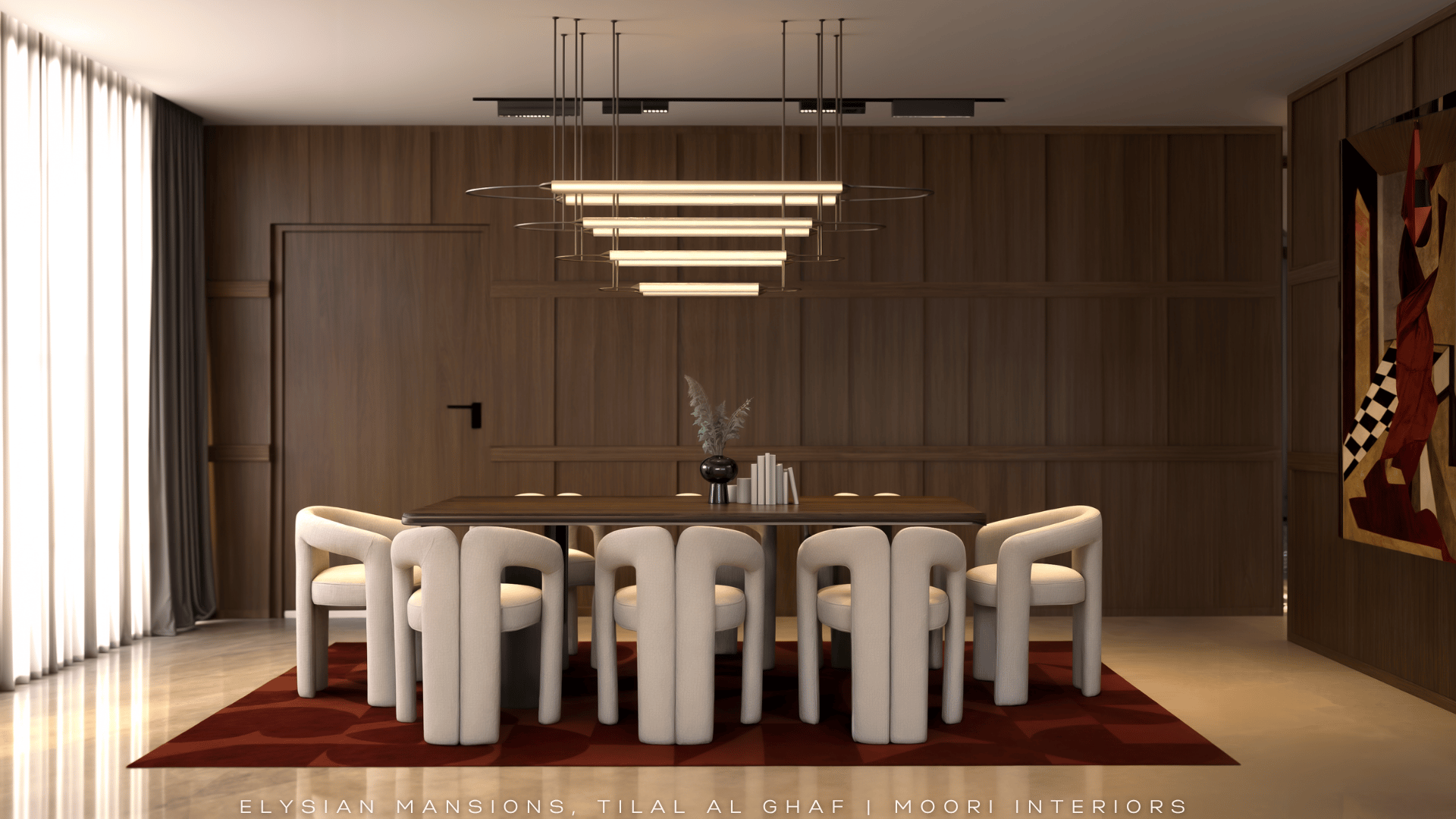
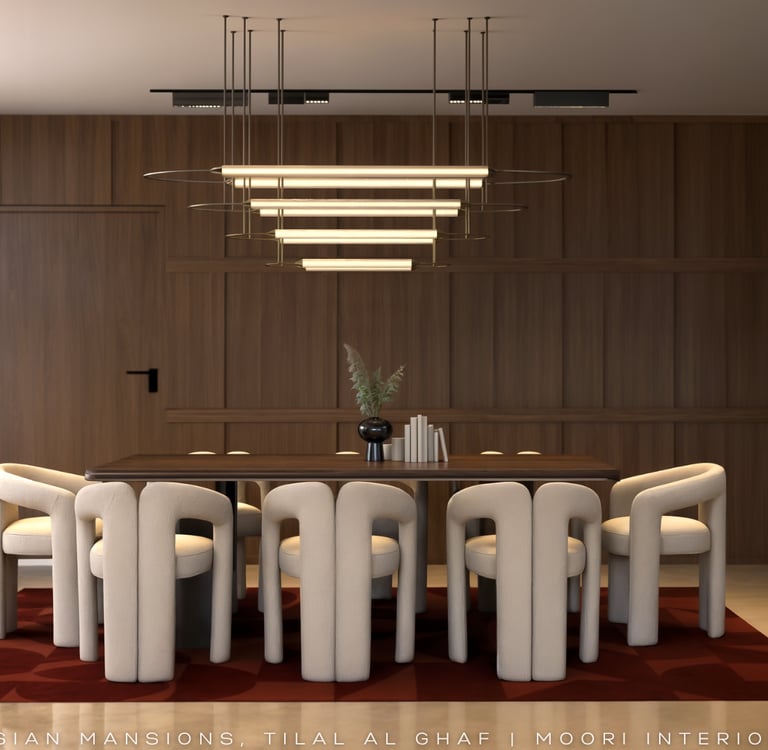
Dining rugs are driven as much by function as they are by aesthetics. The key consideration is movement as chairs should slide comfortably without catching edges or shifting the rug. Low-pile or flatweave options tend to perform better here, especially in homes where the dining space is used frequently. Visually, the rug should relate to the table shape, reinforcing it rather than contrasting it too heavily.
Dining Area
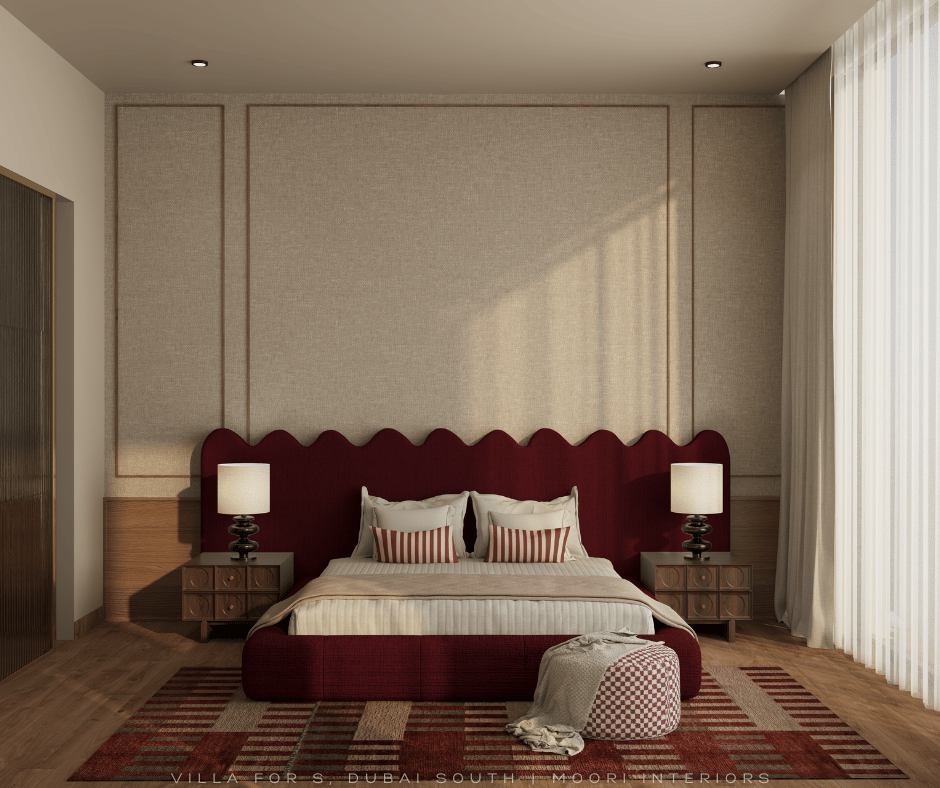
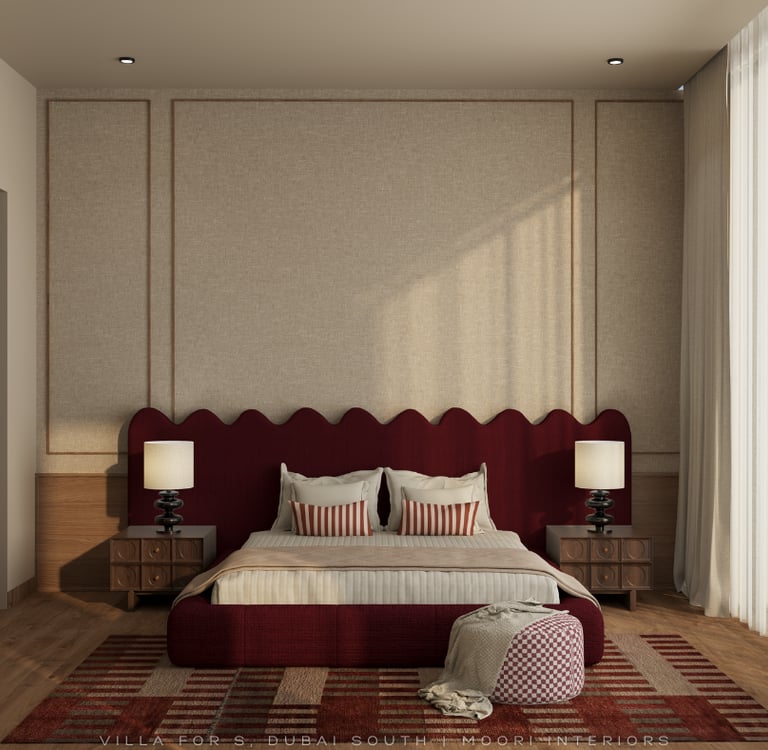
Rugs in bedrooms are experienced more through touch than sight. Placement is typically centred around the bed, with enough extension on either side to ensure a soft landing underfoot. In more layered interiors, rugs may be used in multiples — a larger neutral base paired with a smaller, more detailed rug to introduce depth without overwhelming the space.
Lounge and Family Areas
Entry rugs set the first impression but also deal with the most wear. Durability and ease of maintenance become just as important as appearance. Runners or narrower formats work well in transitional layouts, guiding movement while adding a sense of progression into the home. Patterns that are slightly more forgiving tend to age better in this zone.
Entryway
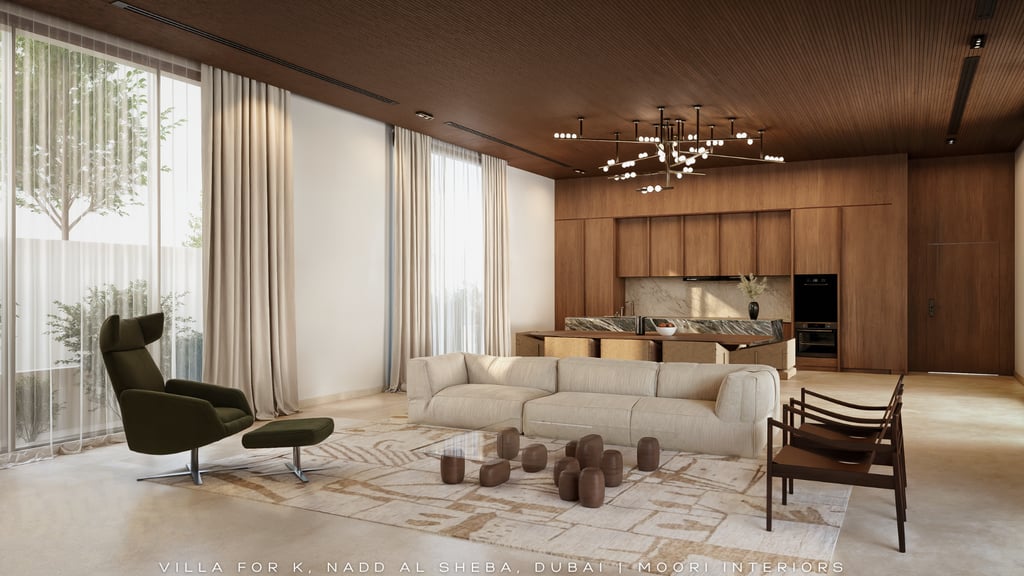
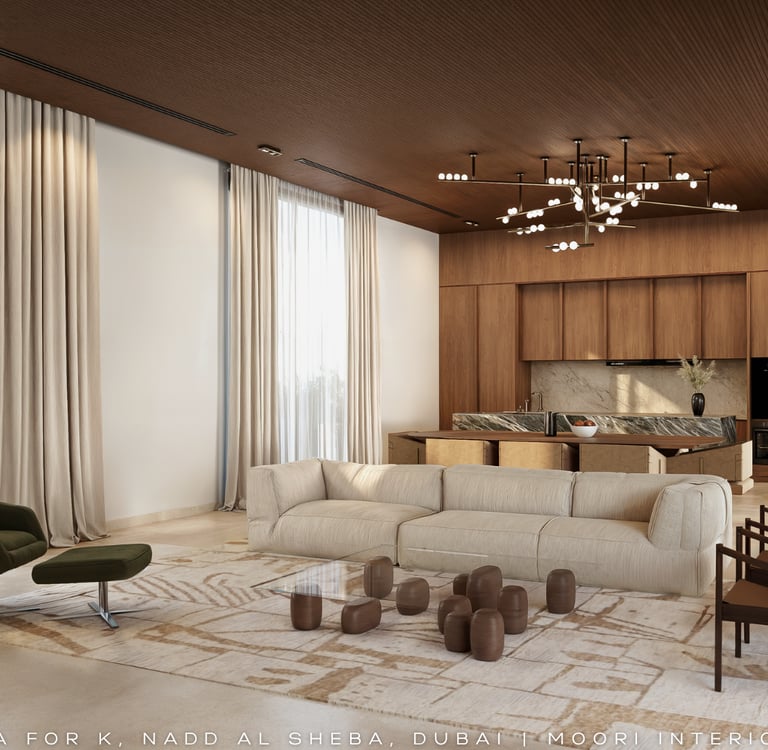
These spaces are typically more relaxed and used in varied ways, so rug choices lean towards comfort and adaptability. Softer textures, deeper piles, or layered combinations work well here, especially in settings designed for longer use. Unlike formal living rooms, there is more flexibility in placement, allowing rugs to respond to how the space is occupied rather than strictly defined layouts.
Rugs occupy a unique position where design, material, and everyday use come together. They are not defined by ornamentation alone, but by how they influence proportion, texture, and the overall reading of a space.
Across different interiors, the choice of rug consistently comes down to three things: material quality, construction method, and how it relates to the way a space is used. When these align, the rug becomes a natural extension of the interior rather than an added layer.
Care and maintenance also play a role in how a rug evolves over time. Different materials respond differently to use, light, and cleaning methods, which makes informed selection important from the start. A well-chosen rug holds its appearance and develops character gradually when it is looked after appropriately.
Ultimately, rugs are not static elements within a home. They shift in tone with time, use, and context, which is what makes them one of the most enduring components of interior design.
Conclusion
-----------------------------------
At Moori our commitment is to deliver designs that meet and exceed your expectations.
Visit www.moori.ae to discover our meticulously crafted spaces.
Curious to learn more? We encourage you to engage with our expert designers through a complimentary consultation at moori.ae/complimentary-consultation.
Let's begin the journey of transforming your space into a masterpiece.
Address:
Office No: 304 , Building A1
Emirates Sports Hotel Apartments
Opposite Fit Republik, Sports City
Dubai, United Arab Emirates
Let's create an array of immersive experiences together!